
Introduction
Email is the front door of your business. Customers rely on it for invoices, support, confirmations, and marketing messages—so protecting it is not optional. Three standards exist to prevent email fraud and improve deliverability: SPF, DKIM, and DMARC.
What Are SPF, DKIM, and DMARC?
Here's a simple explanation of the three standards in terms everyone can understand:
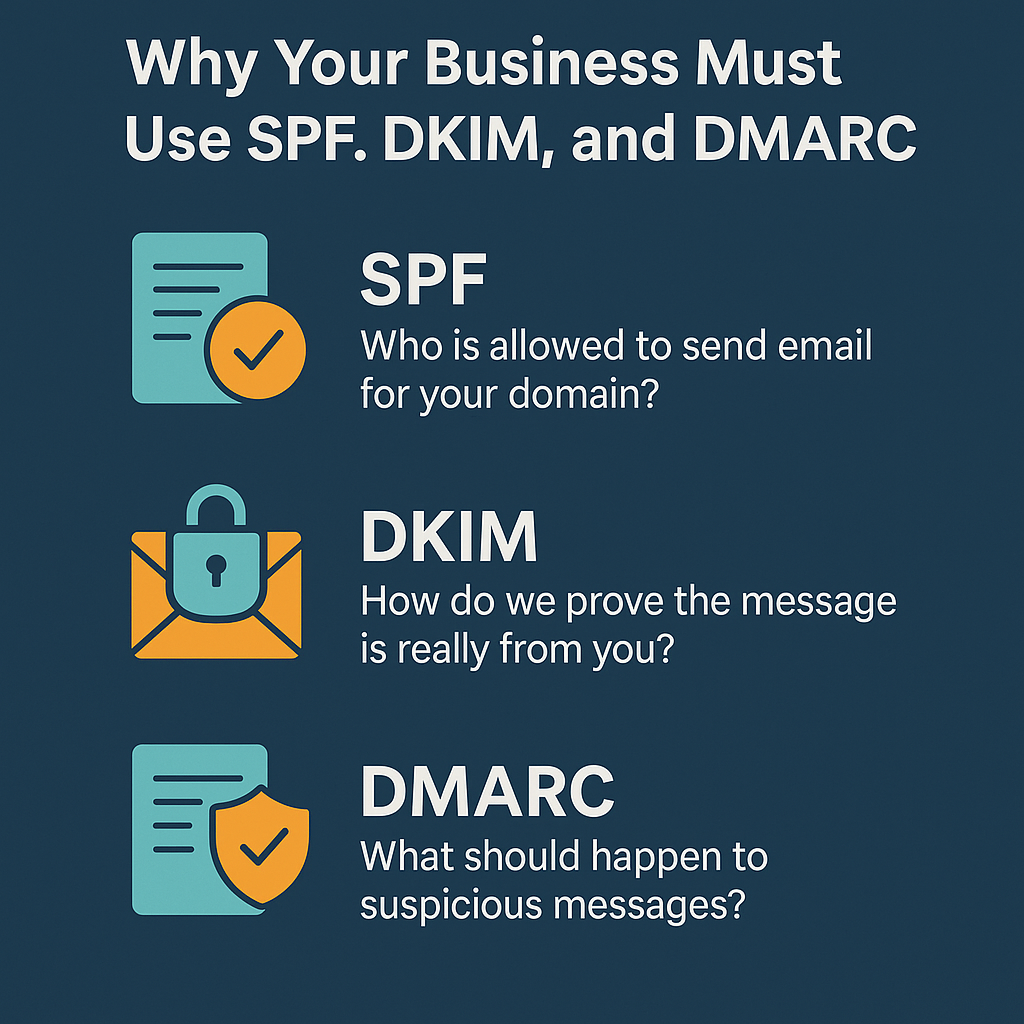
SPF - Who is allowed to send email for your domain?
SPF (Sender Policy Framework) creates an approved list of systems allowed to send on your behalf. This prevents unauthorized servers from pretending to be from your domain.
DKIM - How do we prove the message is really from you?
DKIM (DomainKeys Identified Mail) adds a tamper-proof digital signature so receivers know the email is legitimate and hasn't been altered in transit.
DMARC - What should happen to suspicious messages?
DMARC (Domain-based Message Authentication, Reporting & Conformance) tells receiving servers to allow, quarantine, or reject email that fails checks, and gives you reports on who is using your domain.
Why This Matters for Your Business
Implementing these standards isn't just a technical formality—it's critical to your business operations. Here are four key reasons:
1. Protects your brand from impersonation
Without these protections, anyone can send email pretending to be your company. DMARC enforcement is the only reliable way to stop that.
2. Ensures customers actually receive your emails
Inbox providers heavily filter unauthenticated mail. Poor or missing SPF/DKIM/DMARC means:
- More emails going to spam - Your communication never reaches its destination
- Lower open rates - Fewer customers see your messages
- Failed onboarding and support communication - Customers miss critical information
3. Reduces financial and security risk
Spoofed domains lead to fake invoices, phishing attempts, and data breaches. Proper authentication blocks these threats before they reach your customers.
4. Gives visibility into who's sending email as your brand
DMARC reporting exposes all systems—legitimate or not—using your domain. This gives you full control over your email identity.
The Critical Difference: Personal Email vs. Marketing Platforms
It's important to understand that different email systems require different configurations:
Your business mailboxes (Google Workspace, Microsoft 365)
These protect your direct communication. You configure SPF/DKIM/DMARC once for your domain so your normal business emails are trusted and safe.
Marketing or transactional services (Mailchimp, SendGrid, Mailgun, Klaviyo)
These services do not use your normal email system. They send large volumes from their own servers, so each platform must be individually authorized with its own SPF and DKIM setup. If not, campaigns will get blocked or flagged as spam, and DMARC may reject them entirely.
Requirements for a Reliable Email Provider
Even perfect authentication won't help if your provider is low-quality. Your email platform must:
- Support SPF, DKIM, and DMARC - No compromises here
- Provide proper DNS authentication records - Technical support is crucial
- Sign your emails correctly - Every email must be authenticated
- Maintain a strong sender reputation - Their reputation affects your deliverability
Warning: If your provider cannot support DKIM especially, it is a business liability—stop using it.
Marketing and transactional services must also fully support domain authentication; otherwise, your campaigns will underperform or fail.
Tools to Check Your Setup
Here are some useful tools to validate and monitor your email security:
Validation Tools
- MXToolbox - Quick lookups for SPF, DKIM, DMARC
- DMARC Analyzer - Validation and easy reports
Monitoring and Reporting Tools
- Postmark DMARC Digests - Human-readable DMARC reporting
- Valimail Monitor - DMARC monitoring tool
- dmarcian - Comprehensive DMARC management
These help you confirm your domain is protected and performing well.
Conclusion: Act Now
Implementing SPF, DKIM, and DMARC is not technical fluff—it is fundamental brand protection. You prevent impersonation, improve deliverability, secure your communication, and ensure your business emails reach the people who need them.
If these are missing or misconfigured, you risk your reputation, your revenue, and your customers' trust.
Take control of your email security today—your business deserves it.